In a large bowl, combine 2 tablespoons of Meyer lemon zest with ⅔ cup of granulated sugar. Use your fingers to rub the zest into the sugar, releasing the flavorful oils. This simple step enhances the overall lemon flavor in the cake.
Whisk in 4 teaspoons of cornstarch and a pinch of fine sea salt until evenly distributed. This mixture will be the base for your lemon curd.
Transfer this mixture to a medium, heavy-bottomed saucepan set over low heat. As you whisk in 4 large egg yolks and 1 large egg, ensure you whisk until smooth. This is where the magic begins!
Slowly add in ½ cup of freshly squeezed Meyer lemon juice while continuing to whisk. Keep an eye on the heat, ensuring it remains low. The mixture will thicken gradually.
Continue whisking regularly over low heat until the mixture thickens enough to coat the back of a spatula. You want it to reach 170ºF, which is essential for the lemon curd to set properly.
Once thickened, remove the saucepan from heat and whisk in 3 tablespoons of unsalted butter, one cube at a time, until fully melted and incorporated. This adds richness to your curd.
Strain your mixture through a fine mesh sieve to remove any bits of zest or cooked egg, ensuring a smooth curd. Set aside to cool completely. If you’re not using it right away, cover with plastic wrap pressed directly onto the surface to prevent a skin from forming.
Preheat your oven to 350ºF. While the oven heats up, prepare three 6-inch round baking pans by buttering and lining them with parchment paper. Lightly butter the parchment for easy removal later.
Back in your mixing bowl, combine the previously prepared zest and sugar mixture with 1 ½ cups of sifted cake flour, 1 ½ teaspoons of baking powder, and another ½ teaspoon of fine sea salt. Mix briefly until combined.
Sprinkle 10 tablespoons of unsalted butter over the flour mixture. Using a paddle attachment, mix until the butter is broken into pea-sized pieces and the mixture resembles sandy crumbs.
With the mixer on low, drizzle in ½ cup of freshly squeezed Meyer lemon juice and ¼ cup of whole milk. Increase the speed to medium-high and beat for 3 to 4 minutes until the batter is light and fluffy.
Meanwhile, whisk together 3 large eggs and 1 teaspoon of vanilla extract into the remaining ¼ cup of milk. With your mixer running on low, add this egg mixture in 2 to 3 additions, mixing well after each addition.
Divide the batter evenly among the prepared pans (approximately 250 grams of batter in each). Bake for 22 to 25 minutes, rotating the pans halfway through. The cakes are done when a toothpick inserted in the center comes out clean.
Once baked, remove the pans from the oven and allow them to cool on a wire rack for about 10 minutes. Gently run a knife around the edges and invert the cakes onto wire racks to cool completely.
While your cakes are cooling, prepare the buttercream. In a double boiler, combine 4 large egg whites, 1 ⅓ cups of granulated sugar, and a pinch of fine sea salt. Whisk vigorously until the mixture doubles in volume and the sugar is fully dissolved.
Transfer the mixture to a stand mixer fitted with a whisk attachment. Beat on medium-high speed until the meringue is tripled in volume and forms stiff, glossy peaks.
With the mixer running on medium speed, gradually add 22 tablespoons of unsalted butter, one chunk at a time, mixing until fully incorporated before adding more. You’ll notice your buttercream changing from stiff peaks to a soft consistency.
If at any point the buttercream begins to curdle, increase the mixer speed to high until it comes back together. Don’t worry if it seems too soft; refrigerate for a short time and then rewhip for a fluffy texture.
Once the buttercream is ready, switch to a paddle attachment and add ½ cup of the cooled lemon curd. Mix on low until fully combined.
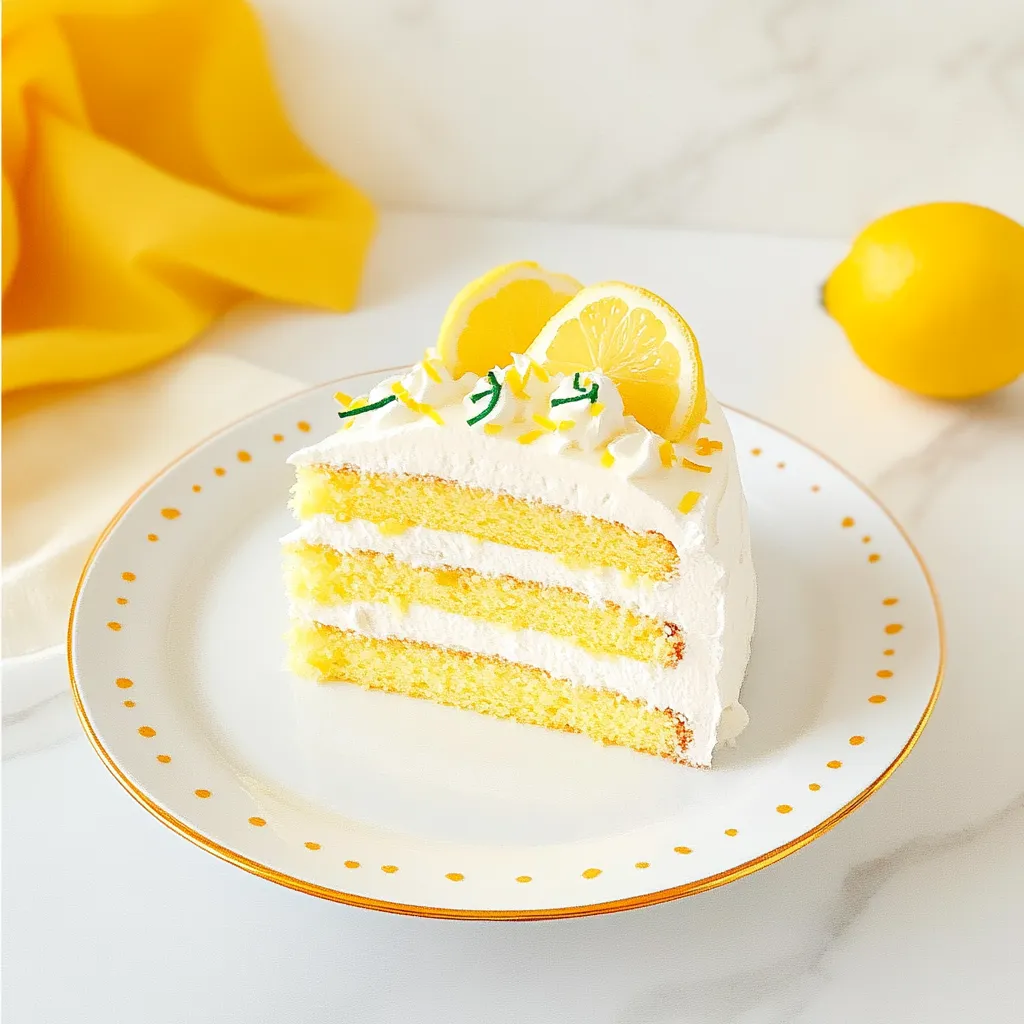
Now it’s time to assemble! Place one cake layer on a stand or plate, pipe a ring of buttercream around the edge, and fill the center with about ¼ cup of lemon curd. Repeat with the second layer.
Top with the final layer, then cover the entire cake with a thin layer of buttercream to create a crumb coat. Refrigerate for 15 minutes to set.
Finally, frost the cake with the remaining buttercream, reserving some for decorative piping if desired. Slice, serve, and prepare for the compliments!