Start by rinsing the brisket under cold water and pat it dry with paper towels. This simple step helps to remove any surface impurities and prepares your meat for seasoning. Next, place it in a ceramic or glass oven-safe roasting dish, ensuring it fits snugly. It’s crucial to use the right dish, as it helps retain moisture during the cooking process.
In a small mixing bowl, whisk together the pomegranate molasses, ¼ cup of olive oil, minced garlic cloves, cinnamon, salt, and cayenne pepper. This marinade is the heart of the dish; it will infuse the brisket with incredible flavor. Make sure all ingredients are well blended to create a uniform mixture.
Pour half of the marinade over the top of the brisket, ensuring the entire surface is covered in an even layer. Next, turn the brisket over and pour the other half of the marinade over it, ensuring both sides are evenly coated. This thorough coating ensures maximum flavor absorption.
Cover the dish with plastic wrap and marinate in the refrigerator overnight or for up to two days. This step is essential as it allows the flavors to penetrate the meat deeply, resulting in a more flavorful and tender brisket.
When you’re ready to cook, preheat your oven to 300 degrees Fahrenheit. This low temperature allows the brisket to cook gently, ensuring it becomes tender without drying out. While the oven heats, heat 2 tablespoons of olive oil in a large skillet over medium heat.
Remove the brisket from the marinade, scraping any excess marinade back into the roasting dish. Place the brisket in the hot skillet. Brown the brisket on both sides for about 5 minutes per side. This step adds a beautiful crust and enhances the flavor through caramelization.
While the brisket is browning, stir ¼ cup of water into the marinade at the bottom of the roasting dish to create more liquid. This liquid will help keep the brisket moist while it cooks and will also serve as a delicious sauce at the end.
After browning, transfer the brisket back to the roasting dish on top of the liquid marinade, ensuring the fatty layer is on top. This positioning helps keep the brisket juicy as it cooks. In the same skillet, add the sliced onions and sauté for 10 to 15 minutes, scraping up the brown bits from the bottom of the pan.
Once the onions are nicely browned and caramelized, pour them over the top of the brisket. Don’t forget to include the brown bits and oil from the skillet; they add incredible flavor. Use a spoon to scoop some of the marinade from the bottom of the dish and spoon it over the top of the onions.
Cover the roasting dish tightly with foil. Place the brisket in the oven and let it slowly roast for 4 to 5 hours. It will take about one hour per pound of meat. If your cut of brisket is lean, you may need to add a little more water halfway through cooking to keep it moist. The brisket is ready when it flakes tenderly, which means it’s perfectly cooked.
Once cooked, scrape the onions off the top of the brisket and reserve them. Remove the brisket from the pan and place it on a cutting board. Cover it with foil to keep warm and let it rest for 20 to 30 minutes. This resting period is crucial as it allows the juices to redistribute, ensuring every slice is juicy.
Meanwhile, strain the pan drippings into a saucepan and allow them to cool. As they cool, the fat will rise to the surface. Skim as much of this fat off as you can. Using an immersion blender, blend the reserved onions into the cooking liquid to thicken the sauce and enhance the flavor. If you want a stronger pomegranate flavor, feel free to blend in an additional tablespoon of pomegranate molasses.
Warm the sauce in a small saucepan on the stovetop. Season with salt and pepper to taste. Cut the fat cap off the brisket, then slice the brisket thinly against the grain. This technique helps ensure each bite is tender and flavorful.
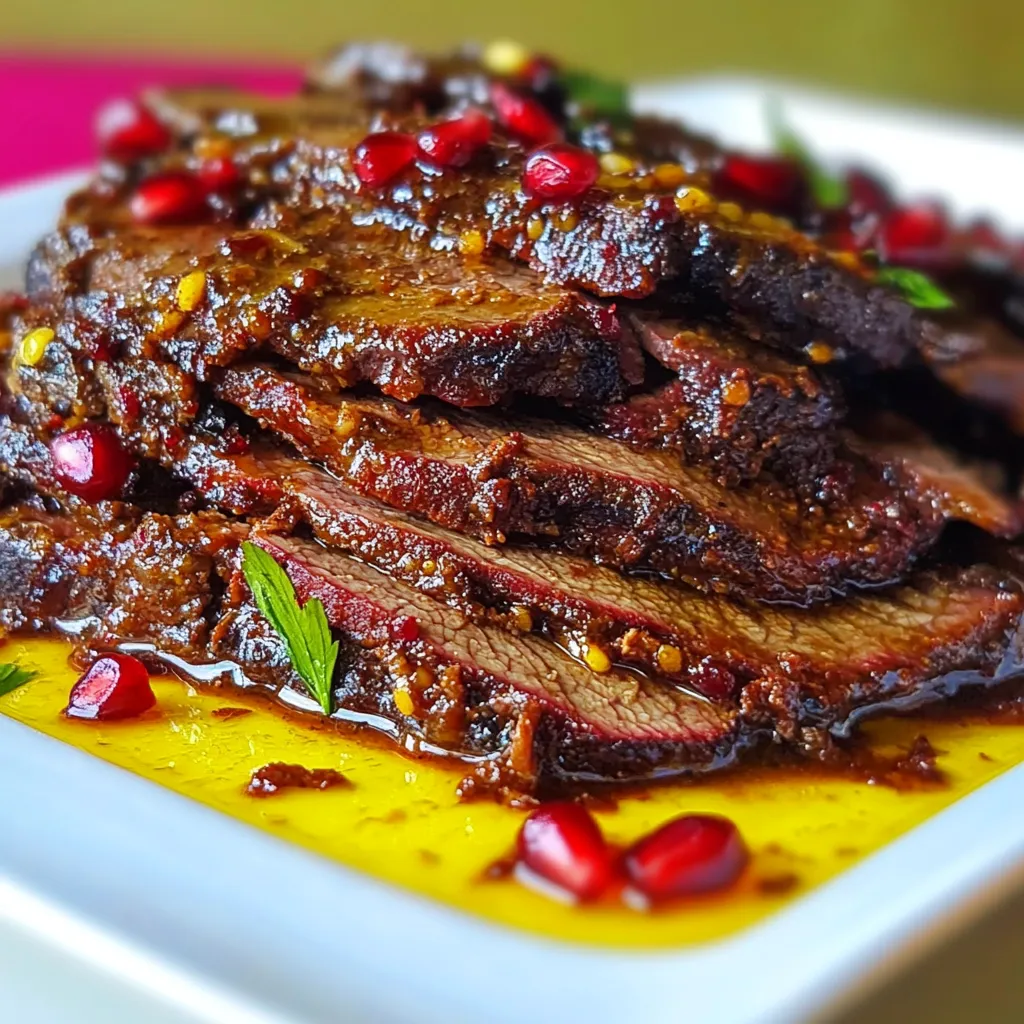
Place the brisket slices into a serving dish and pour the warmed sauce over them. My favorite way to serve this brisket is over freshly cooked saffron rice, garnished with fresh pomegranate seeds and mint leaves for a colorful and aromatic presentation.