Start by placing a large mixing bowl on a kitchen scale. Change the unit to grams and zero it out. Measure out 500 grams of whole wheat flour into the bowl. If you don’t have a scale, don’t worry. You can fluff the flour in its container, spoon it into a measuring cup, and level it off until it amounts to roughly 3¾ cups.
Next, add 2 teaspoons of kosher salt and 1 teaspoon of dry active yeast to the flour. Mix well to incorporate all the dry ingredients together.
Now, it’s time to add 2 cups of warm water. Use a wooden spoon or spatula to mix until all the flour is fully moistened. Be careful not to overmix; you just want to combine everything until there are no dry pockets of flour left.
Cover the mixing bowl with plastic wrap or a clean kitchen towel. Let the dough rest at room temperature for at least 8 hours, or if you have the time, up to 18 hours. This long resting period is crucial for developing flavor and structure.
After the dough has risen nicely, turn it out onto a lightly floured piece of parchment paper or a floured surface. Lightly flour your hands and roughly shape the dough into a circle. Keep in mind that the dough will be sticky, so don’t be alarmed!
While you’re shaping the dough, preheat your oven to 450℉ (230℃) with your Dutch oven (with the lid) placed inside. This step is essential for creating that perfect crust.
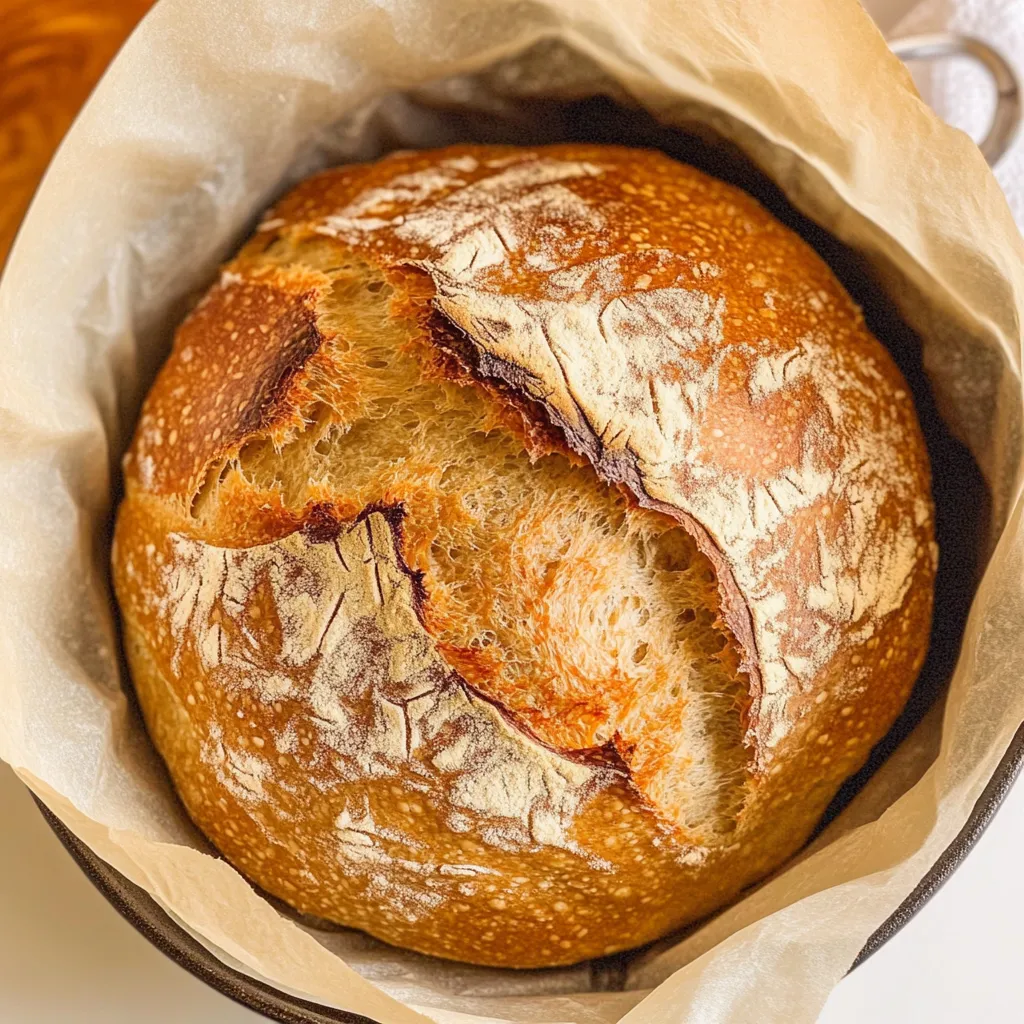
Once the oven is preheated, carefully remove the Dutch oven and gently drop the shaped dough into it. It’s okay if it’s not perfect; rustic is part of the charm!
Place the lid on the Dutch oven and bake for 30 minutes. After this first phase, carefully remove the lid and continue baking for an additional 20 minutes, or until the bread is golden brown and the internal temperature reaches between 207-209°F (97-98℃).
Once baked, carefully remove the bread from the Dutch oven and let it cool on a wire rack for 30 to 45 minutes before slicing. This cooling period allows the texture to develop fully, making for a better slice.