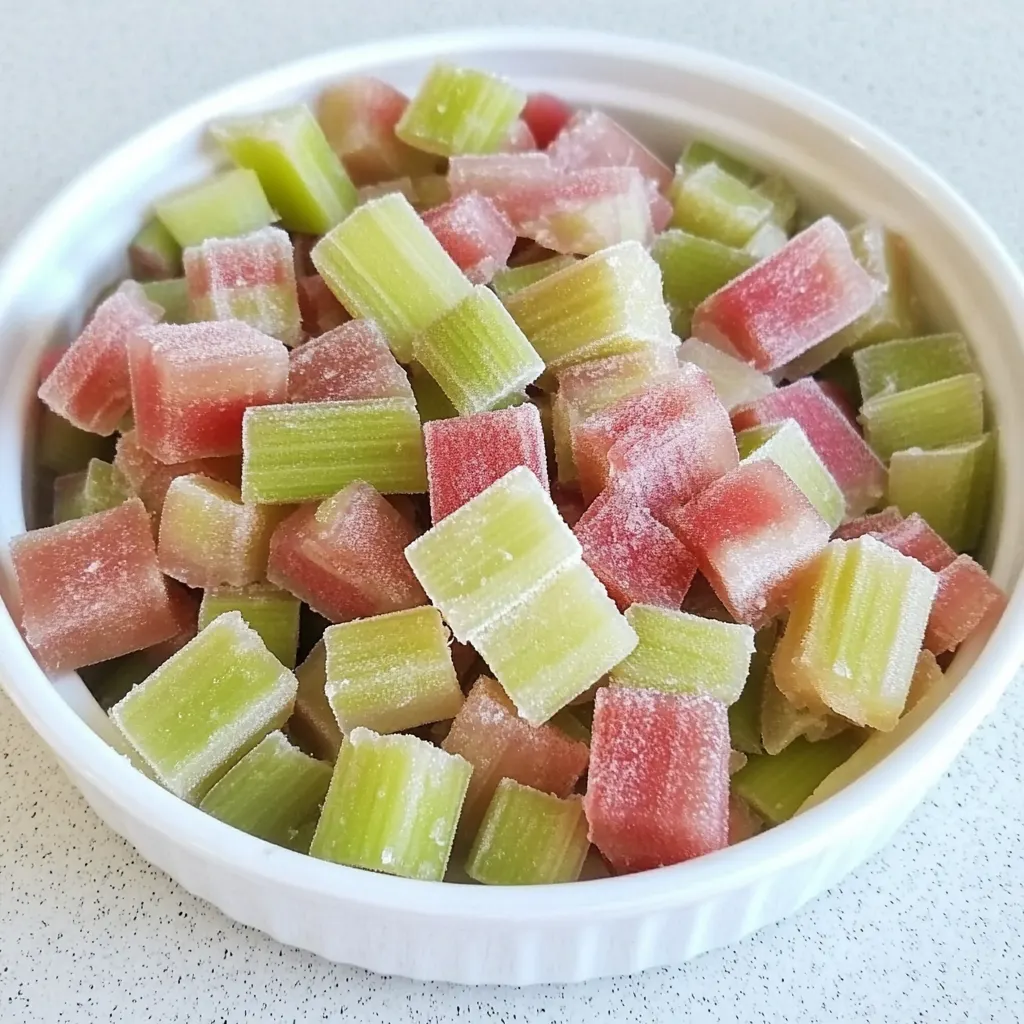
Start by selecting your rhubarb. You can either pick it from your garden or purchase it from the farmers market or store. Look for firm stalks with vibrant colors, as they indicate freshness.
If your rhubarb has leaves, you’ll want to discard them. The leaves are toxic and should never be consumed. Cut off the leaves and set the stalks aside.
Next, wash your rhubarb thoroughly under cool running water. It’s essential to remove any dirt or grit that may be clinging to its surface. Dry them with a clean towel to prep for trimming.
Trim any rough ends of the stalks. This step helps create an even texture for freezing and makes them look nice when you thaw them later.
Now, slice the rhubarb into thin pieces. Aim for uniform sizes—about half an inch thick works well. This ensures they freeze evenly and are easy to use in future recipes.
Take a zip-top freezer bag and place the sliced rhubarb inside. It’s crucial to press the bag flat to remove as much air as possible. This helps prevent freezer burn and keeps your rhubarb fresh.
Seal the bag tightly, making sure no air is left inside. This is key to preserving the quality of your frozen rhubarb.
Next, place the sealed bag onto a small baking sheet and pop it into the freezer. Freezing it on a sheet allows the rhubarb to maintain its shape and not clump together.
Let it freeze for at least four hours. This step ensures the rhubarb is completely solid before storing it for the long term.
After four hours, remove the baking sheet and store the bag upright or flat in the freezer. You can measure out your frozen rhubarb whenever you're ready to use it in your favorite recipes!