To begin, let’s make the poolish. In a mixing bowl, stir together 2½ cups of unbleached bread flour, 1½ cups of water, and ¼ teaspoon of instant yeast. You want to ensure all the flour is hydrated. The consistency should resemble very thick pancake batter, soft and sticky. Cover the bowl with plastic wrap and let it ferment at room temperature for 3 to 4 hours until it becomes bubbly and foamy. Once it’s ready, pop it into the refrigerator where it can keep for up to 3 days.
Next, remove the measured poolish from the refrigerator about an hour before you plan on making the dough.
In a large mixing bowl or electric mixer, combine 3½ cups of unbleached bread flour, 1 teaspoon of salt, 1½ teaspoons of instant yeast, 1 teaspoon of ground cinnamon, ¼ teaspoon of ground nutmeg, ¼ teaspoon of ground allspice, and ¼ teaspoon of ground cloves. Mix these dry ingredients together thoroughly.
Add in the poolish, 1 teaspoon of orange extract, 1 teaspoon of almond extract, 2 slightly beaten eggs, ¼ cup of honey, ¼ cup of olive oil, and ¾ cup of lukewarm milk. Stir everything together with a sturdy spoon or mix on low speed with the paddle attachment until the dough forms a cohesive ball.
Now, it’s time to knead! Sprinkle some flour on your counter; transfer the dough onto it and begin kneading. If you're using an electric mixer, switch to medium speed with the dough hook. As you knead, add more milk or flour as necessary to form the dough into a soft, yet not sticky ball. The texture should feel tacky and supple. Knead for about 10 minutes, and during the last two minutes, mix in the raisins, chopped dried figs, and chopped walnuts.
Once kneaded, perform the windowpane test to ensure the dough is ready. It should be pliable and register between 77° to 81°F. Lightly oil a bowl and place the dough in it, rolling it around to coat it with oil. Cover the bowl with plastic wrap and let it ferment at room temperature for 90 minutes, or until it doubles in size.
After the dough has risen, shape it into a boule. Transfer it to a sheet pan lined with baking parchment. Mist the dough with some spray oil and loosely cover it with plastic wrap. Let it proof at room temperature for about 60 to 90 minutes or until it nearly doubles in size.
For the decorative cross, before shaping the dough into a boule, divide it into two pieces, one piece twice the size of the other. Shape the larger piece into a boule and proof it as instructed in the previous step. Place the smaller piece into a plastic bag and chill it in the refrigerator.
When the larger piece is ready to bake, take the smaller piece out from the refrigerator. Divide it in half and roll each half into a 10-inch-long strand. Cross the two strands of dough over the top of the boule. Using a pastry scraper, split the ends of each strand and coil them to form a decorative cross.
Preheat your oven to 350°F, ensuring the oven rack is in the middle position.
Now, bake the loaf for about 20 minutes. After that, rotate the pan 180 degrees for even baking and continue baking for another 20 to 25 minutes. You're looking for a golden brown loaf that registers 190°F and makes a hollow sound when thumped on the bottom.
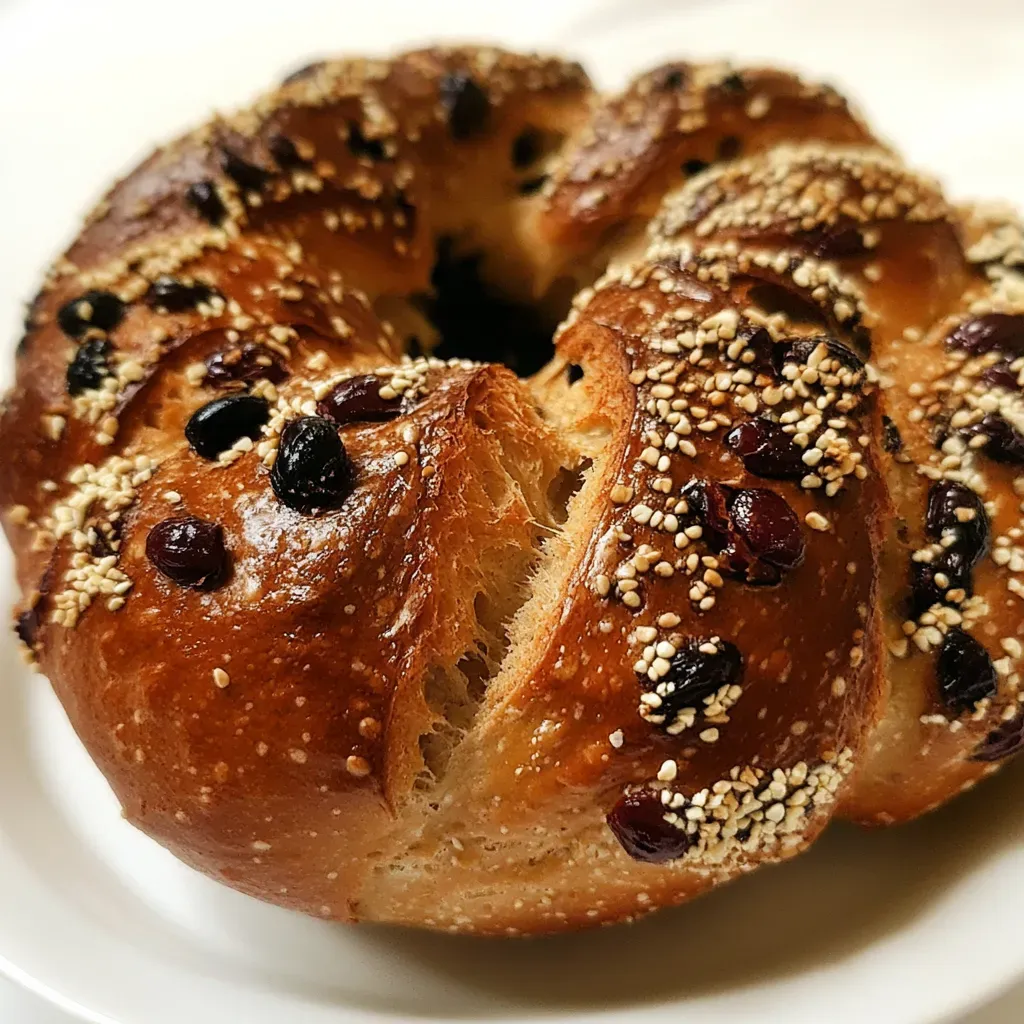
For the glaze, combine 2 tablespoons of water and 2 tablespoons of sugar in a saucepan, bringing it to a boil. Add the honey and 1 teaspoon of orange extract, then turn off the heat. If necessary, reheat the glaze before applying it to the bread. Brush the loaf with the glaze and immediately sprinkle with sesame seeds.
Finally, transfer the bread to a rack and allow it to cool for at least 1 hour before slicing or serving. Enjoy this beautiful creation that brings a taste of Greek tradition to your table!