

The Mashed Potato Casserole brings me back to childhood dinners filled with laughter and warmth. Every winter, my family would gather around the table, and one dish was always a must-have: creamy, fluffy mashed potatoes cloaked in a cheesy layer, all baked to perfection. I remember the excitement as the aroma wafted through the house, coaxing everyone to the kitchen. This dish became a symbol of comfort on cold nights, a hearty side that always made its way to our holiday celebrations, especially during Thanksgiving. I can still hear my grandmother’s voice sharing her secret tips, making this casserole a family favorite. It’s more than just a recipe; it’s a tradition that I love sharing with my own family now.
Recipe Snapshot
1 hr 40 mins
20 mins
80 mins
Medium
320 kcal
6 g
Keto, Gluten-Free, Low FODMAP
15 g
Electric Hand Mixer
Why This Mashed Potato Casserole Is So Good
Comfort Food at Its Finest
The Mashed Potato Casserole is truly the definition of comfort food. There’s something about the combination of creamy sour cream, rich cream cheese, and fluffy russet potatoes that hits the spot every single time. This dish wraps you in a warm embrace, making it perfect for cozy evenings.
A Versatile Side Dish
This casserole is incredibly versatile! It pairs beautifully with a variety of main dishes, from roasted meats to vegetarian entrees. You can serve it at family gatherings, holiday feasts, or even casual weeknight dinners. No matter the occasion, it always finds a way to elevate the meal.
Easy to Prepare
One of the best things about the Mashed Potato Casserole is how easy it is to prepare. Most of the steps involve simple mixing and boiling. Even if you’re not a seasoned chef, you’ll find this recipe accessible and straightforward. It’s perfect for inviting kids into the kitchen to help out!
Make Ahead of Time
This casserole is ideal for meal prep. You can assemble it a day in advance and pop it into the oven when you’re ready to serve. This makes it a great option for busy weeknights or special occasions where you want to spend more time with your guests rather than in the kitchen.
Delicious Leftovers
Let’s not forget about the leftovers! The Mashed Potato Casserole tastes even better the next day as the flavors meld together. Reheating a serving in the oven brings back that delightful creaminess and helps maintain its crispy top.
Ingredients Required for Mashed Potato Casserole
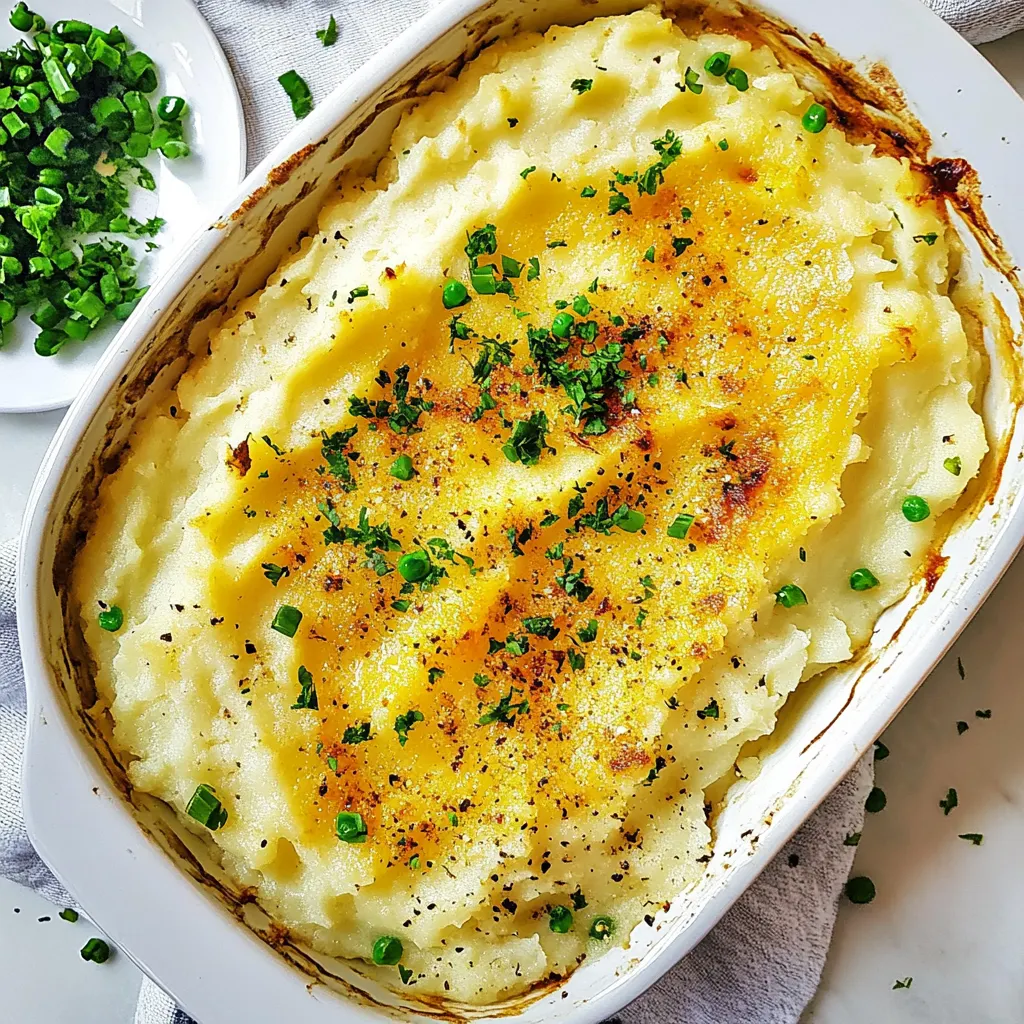
Each ingredient in this Mashed Potato Casserole plays a vital role in achieving the creamy, dreamy texture we all love. The key players include fluffy russet potatoes that form the base, complemented by rich sour cream and cream cheese for that creamy finish. With some seasoning and a touch of butter, this dish becomes an irresistible side.
- Sour Cream: ½ cup adds creaminess and a slight tang that elevates the flavor profile.
- Cream Cheese: 4 ounces, softened, ensures a rich and smooth consistency.
- Garlic Powder: 1 ½ teaspoons impart a savory depth to the dish.
- Kosher Salt: 1 teaspoon enhances all the flavors beautifully.
- Freshly Ground Black Pepper: ½ teaspoon gives just the right amount of spice.
- Russet Potatoes: 2 ½ to 3 pounds, quartered, serve as the hearty main ingredient.
- Butter: 6 tablespoons, melted, adds richness, with 2 tablespoons reserved for drizzling.
- Paprika: Used for sprinkling on top, it adds color and a hint of warmth.
- Chives or Italian Flat Leaf Parsley: 2 tablespoons, minced, for a fresh finish.
Making Mashed Potato Casserole
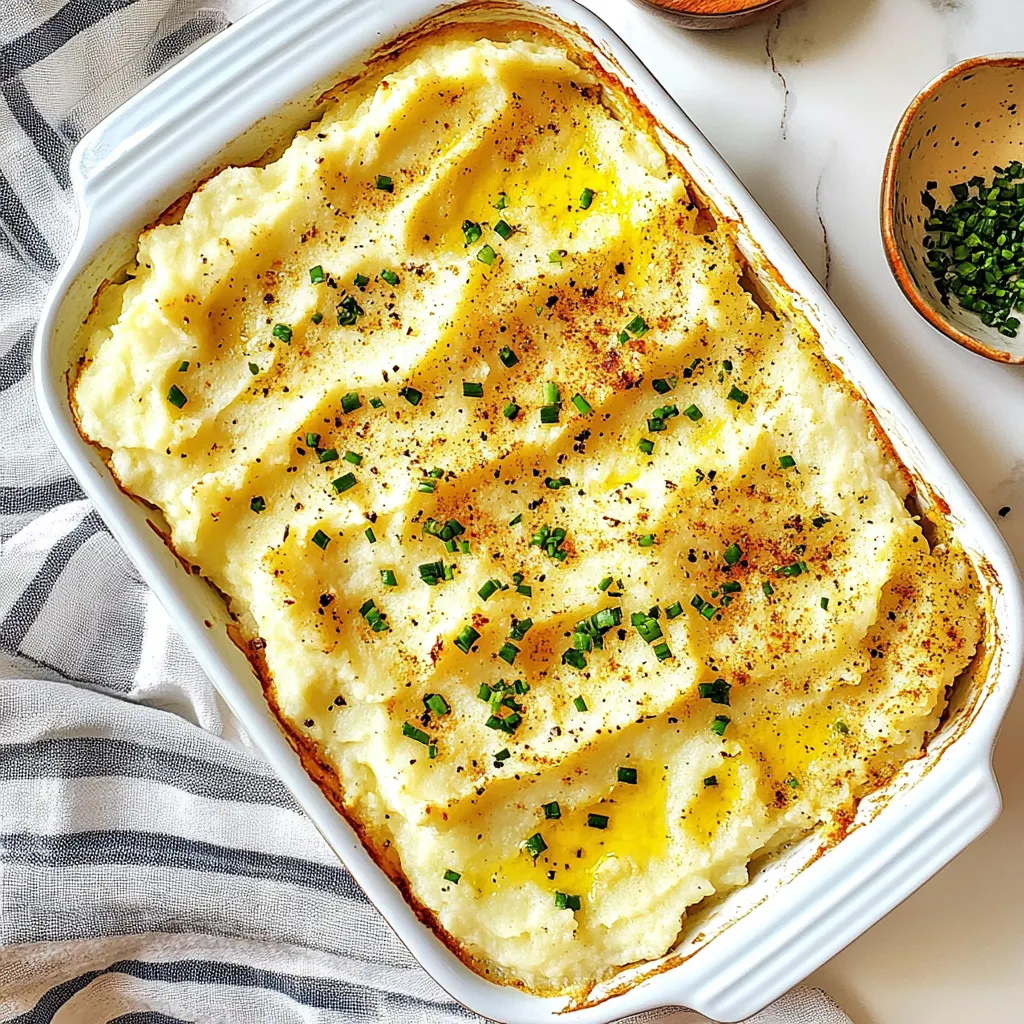
Making the Mashed Potato Casserole is a delightful experience. You’ll love how the aromas fill your kitchen, reminding you of family dinners and cozy nights. Let’s dive into the steps to create this comforting dish.
- Start by mixing the creaming ingredients. Preheat your oven to 400°F. In a small bowl, combine sour cream, cream cheese, garlic powder, Kosher salt, and black pepper. Stir until smooth and creamy, and set it aside.
- Next, boil and mash the potatoes. Place your russet potatoes into a large pot, covering them with about 2 inches of water. Bring the water to a rolling boil and let them cook for 20 to 30 minutes. You’ll know they’re ready when a paring knife can easily pierce through them and the skins start to loosen. Once cooked, drain the potatoes and allow them to cool until you can handle them, but they should still be warm. Peel off the skins and transfer the potatoes to a large bowl.
- Now it’s time to mash! Use a potato masher or an electric hand mixer to mash the potatoes until they’re lumpy but smooth. The warmth of the potatoes will help them blend perfectly with the creamy ingredients.
- Combine the potatoes with the creamy ingredients. Add the sour cream mixture to the mashed potatoes and mix well until fluffy and smooth. It’s important to taste and adjust the seasoning at this stage—feel free to add a pinch more salt or pepper if it needs it.
- Transfer the mixture to a buttered, shallow 2-quart baking dish. Use the back of a spoon or a spatula to create decorative wisps on the surface. This not only looks beautiful, but it also creates little peaks that will crisp up nicely in the oven.
- Drizzle the mashed potato surface with the reserved butter, and sprinkle generously with paprika for flavor and color.
- It’s time to bake! Cover the dish with foil and place it in the preheated oven. Bake for 30 minutes to heat through, then remove the foil and continue baking for another 10 to 15 minutes. You’ll want the tops to turn a beautiful golden brown.
- Once baked, take out the casserole and sprinkle with minced chives or parsley for a fresh finish. Serve warm and enjoy the smiles around the table!
Things Worth Knowing
- Use warm potatoes: Mashing warm potatoes helps incorporate air and creates fluffiness.
- Mix on low: If using a mixer, keep it on low to avoid overworking the potatoes and making them gummy.
- Adjust seasoning: Taste your mixture before baking. If it feels flat, a little more salt can brighten the flavors.
- Watch the bake time: Keep an eye on the casserole towards the end to ensure it doesn’t over-brown.
Making Adjustments
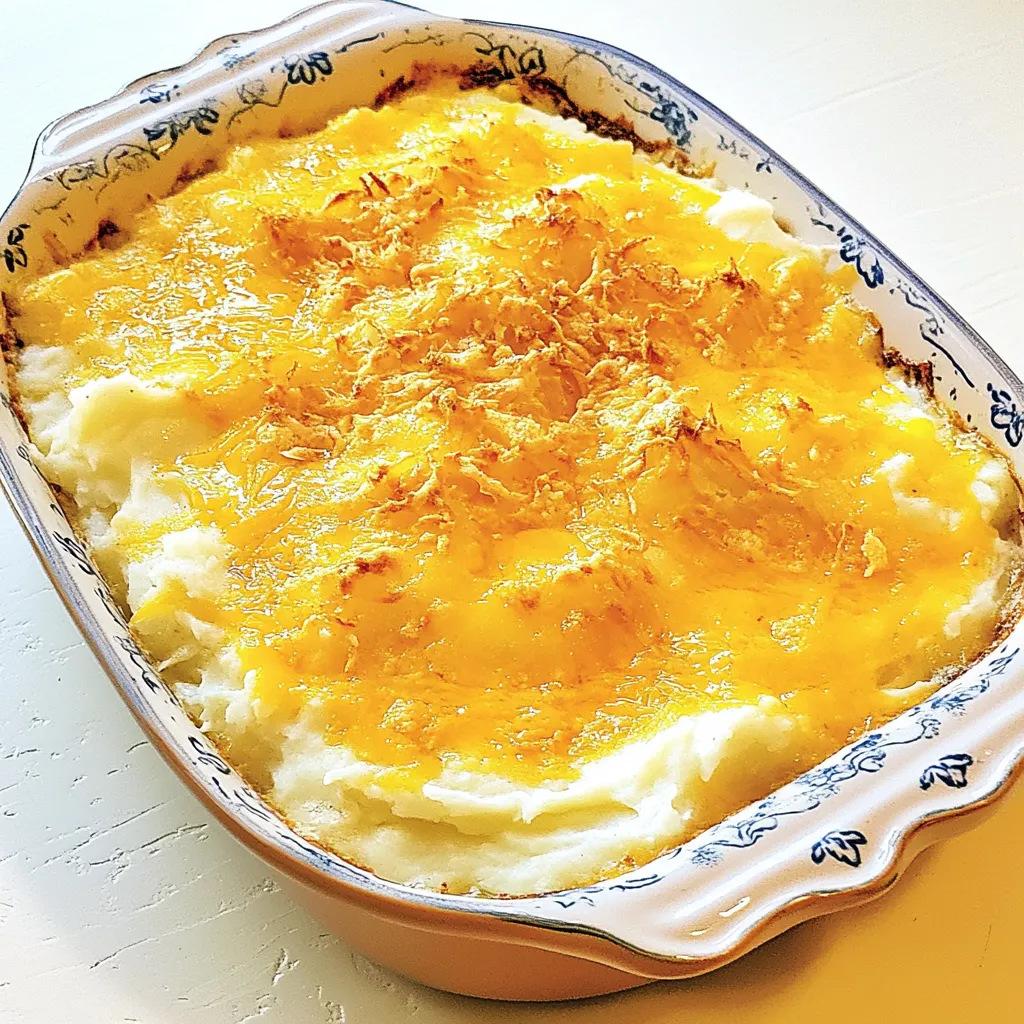
The beauty of the Mashed Potato Casserole lies in its flexibility. You can adjust flavors and ingredients to suit your taste or dietary needs. Here are some tips for making your dish uniquely yours.
- Storage: To store leftovers, let the casserole cool completely before transferring it to an airtight container. It can be kept in the fridge for up to three days.
- Freezing: This casserole freezes well! To freeze, assemble the casserole but do not bake it. Wrap it tightly in plastic wrap and then foil, and it will last for up to two months.
- Pair with proteins: Consider serving this alongside grilled chicken or roasted vegetables for a well-rounded meal.
- Add cheese: For a cheesier flavor, mix in some shredded cheese like cheddar or Monterey jack before baking.
- Herb variations: Experiment with different herbs like thyme or rosemary to infuse unique flavors.
What to Serve Alongside Mashed Potato Casserole
Serving the Mashed Potato Casserole can be just as delightful as making it. Here are some ideas that pair perfectly!
- Roast Chicken: A classic pairing, the flavors of roasted chicken complement the creamy potatoes beautifully.
- Grilled Steak: For a heartier option, serve with grilled steak, allowing the richness of the meat to contrast the fluffy casserole.
- Vegetarian Dishes: This dish works wonderfully with roasted vegetables or a fresh garden salad, making it a versatile option for vegetarians.
- Holiday Feasts: Ideal for Thanksgiving or Christmas dinners, the Mashed Potato Casserole is sure to be a crowd-pleaser at your holiday table.
- Comfort in a Bowl: Don’t shy away from enjoying it with a side of gravy drizzled over the top—it’s pure comfort!
- Seasonal Pairings: During winter, pair it with hearty stews or casseroles for a warm, comforting meal.
FAQ
Conclusion
The Mashed Potato Casserole is a special dish that combines creamy textures and rich flavors, making it a favorite for family gatherings and cozy dinners. I encourage you to give this recipe a try; it’s not just a meal, it’s an experience. Bring the warmth of this casserole to your table tonight and create memories that will last a lifetime.
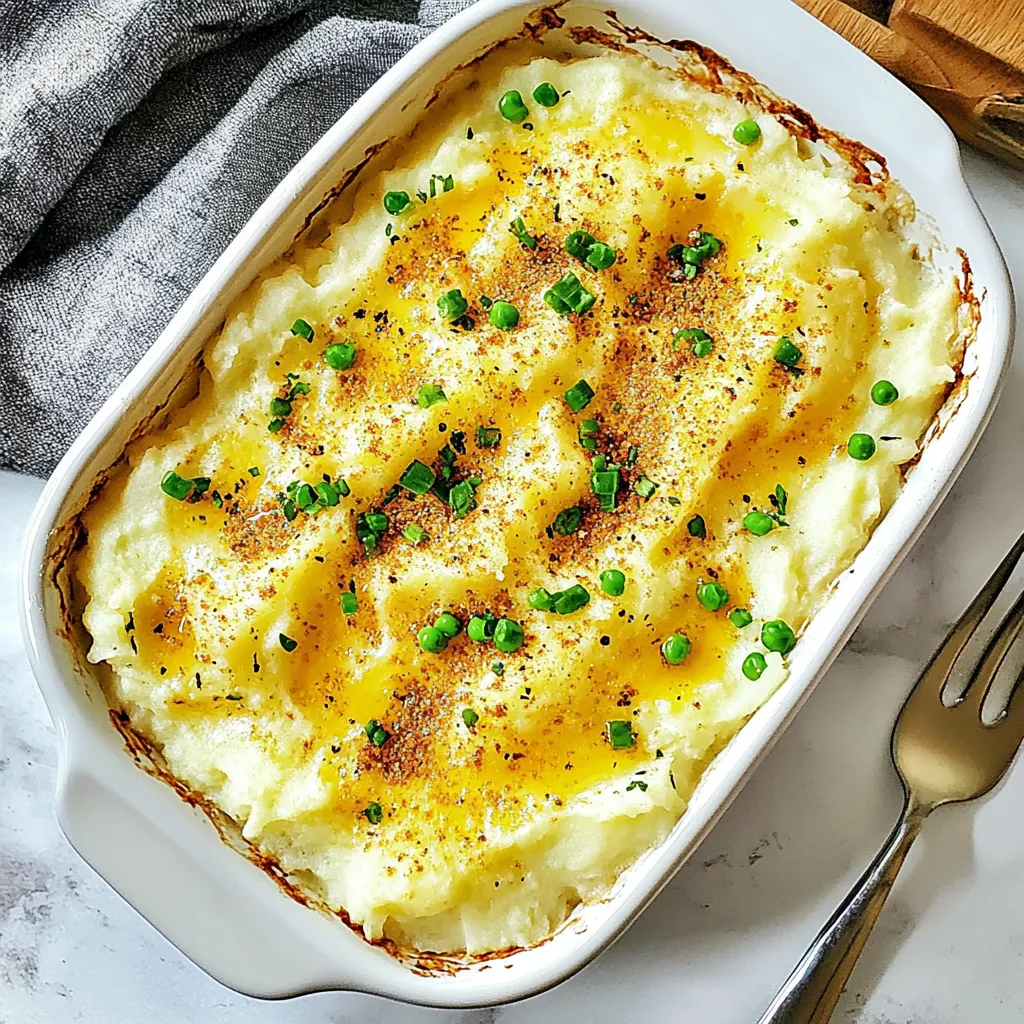
Mashed Potato Casserole
Ingredients
Equipment
Method
- Start by mixing the creaming ingredients. Preheat your oven to 400°F. In a small bowl, combine sour cream, cream cheese, garlic powder, Kosher salt, and black pepper. Stir until smooth and creamy, and set it aside.
- Next, boil and mash the potatoes. Place your russet potatoes into a large pot, covering them with about 2 inches of water. Bring the water to a rolling boil and let them cook for 20 to 30 minutes. You’ll know they’re ready when a paring knife can easily pierce through them and the skins start to loosen. Once cooked, drain the potatoes and allow them to cool until you can handle them, but they should still be warm. Peel off the skins and transfer the potatoes to a large bowl.
- Now it’s time to mash! Use a potato masher or an electric hand mixer to mash the potatoes until they’re lumpy but smooth. The warmth of the potatoes will help them blend perfectly with the creamy ingredients.
- Combine the potatoes with the creamy ingredients. Add the sour cream mixture to the mashed potatoes and mix well until fluffy and smooth. It’s important to taste and adjust the seasoning at this stage—feel free to add a pinch more salt or pepper if it needs it.
- Transfer the mixture to a buttered, shallow 2-quart baking dish. Use the back of a spoon or a spatula to create decorative wisps on the surface. This not only looks beautiful, but it also creates little peaks that will crisp up nicely in the oven.
- Drizzle the mashed potato surface with the reserved butter, and sprinkle generously with paprika for flavor and color.
- It’s time to bake! Cover the dish with foil and place it in the preheated oven. Bake for 30 minutes to heat through, then remove the foil and continue baking for another 10 to 15 minutes. You’ll want the tops to turn a beautiful golden brown.
- Once baked, take out the casserole and sprinkle with minced chives or parsley for a fresh finish. Serve warm and enjoy the smiles around the table!
Notes
- Storage: To store leftovers, let the casserole cool completely before transferring it to an airtight container. It can be kept in the fridge for up to three days.
- Freezing: This casserole freezes well! To freeze, assemble the casserole but do not bake it. Wrap it tightly in plastic wrap and then foil, and it will last for up to two months.
- Pair with proteins: Consider serving this alongside grilled chicken or roasted vegetables for a well-rounded meal.
- Add cheese: For a cheesier flavor, mix in some shredded cheese like cheddar or Monterey jack before baking.
- Herb variations: Experiment with different herbs like thyme or rosemary to infuse unique flavors.